Views: 0 Author: Site Editor Publish Time: 2026-11-27 Origin: Site
The main difference in portable vs conveyor x ray scanner is how objects are inspected and how the equipment is deployed. A conveyor x ray scanner uses a motorized belt to inspect bags and parcels continuously, making it suitable for permanent security checkpoints and high-volume screening. A portable X-ray scanner uses a compact imaging system to inspect stationary objects on-site, making it useful for mobile security operations, suspicious package inspection, and locations without permanent screening infrastructure. Over-committing to fixed assets limits geographical flexibility. Under-sizing equipment leads to severe throughput delays, compliance failures, and compromised material discrimination.
Resolving this requires a technical evaluation of how imaging chains, generator power, and deployment mechanics differ between form factors. Facility leaders must understand the physical limitations and operational strengths of different screening technologies before finalizing procurement. This guide breaks down the technical and operational differences between a portable vs conveyor x ray scanner to facilitate an evidence-based deployment decision.
Throughput vs. Mobility: Conveyor systems are designed for continuous, high-volume screening, while portable systems prioritize rapid deployment and targeted, low-volume inspections.
Imaging and Penetration: Fixed conveyor systems utilize larger generators with higher power output, offering superior steel penetration and advanced multi-energy material discrimination compared to battery-operated portable units.
Infrastructure Demands: Conveyor scanners require permanent installation, dedicated high-voltage power, and reinforced flooring, while portable scanners offer self-contained, battery-powered operation for immediate use in varied environments.
Table of Contents
Selecting appropriate screening hardware begins with a ruthless assessment of facility requirements. Hardware specifications mean nothing if they do not align with the daily operational rhythm of the checkpoint or deployment site. You must map the physical environment and the expected traffic flow before looking at equipment capabilities.
Throughput dictates hardware selection. You must calculate peak-hour baggage or parcel volume to determine if continuous flow is a strict requirement. A standard checkpoint processing 1,000 visitors per hour will collapse under the limitations of batch-processing equipment. Differentiate between standard carry-on items, which flow easily through a 600mm by 400mm tunnel, and oversized cargo that requires pallet-sized 1000mm by 1000mm screening tunnels. If your operation experiences distinct rush hours—such as morning shift changes at a manufacturing plant or event ingress at a stadium—your hardware must sustain continuous belt movement without overheating the generator or requiring constant recalibration.
A fundamental reality of x-ray screening often goes misunderstood: scanners measure material density and atomic number, not specific chemical compounds. Hardware does not flash a red light simply because a specific explosive is present. Instead, it measures how x-ray photons attenuate as they pass through an object. Hardware must be paired with rigorous operator training. Operators interpret these density signatures and color-coded atomic profiles to identify anomalies. Relying solely on hardware specifications while neglecting operator spatial reasoning training creates a false sense of security. The machine provides the data; the human makes the threat determination.
Physical operating environments impose hard limits on equipment selection. Outline the physical limitations of your facility before reviewing equipment brochures. Measure doorway widths down to the millimeter. A standard conveyor scanner frame will not clear a standard 36-inch commercial door without removing the side panels and lead curtains. Verify floor load capacities, as fixed units house heavy lead shielding that can exceed standard commercial flooring limits. Assess the availability of dedicated electrical circuits. Verify the scanner's rated input voltage, current requirements, grounding, and power quality before installation. Larger conveyor systems may require dedicated electrical circuits to support the X-ray generator, conveyor motor, and imaging electronics.
Define the specific types of contraband or threats that dictate your required density analysis. A facility searching for dense metallic weapons requires different penetration capabilities than a mailroom searching for organic powders or narcotics. High-density threats require higher kilovoltage (kV) generators to punch through thick steel enclosures. Organic threats require highly sensitive dual-energy detectors capable of distinguishing subtle differences in low-density materials. Document your specific threat matrix to establish the minimum acceptable penetration depth and wire resolution required for your operation.
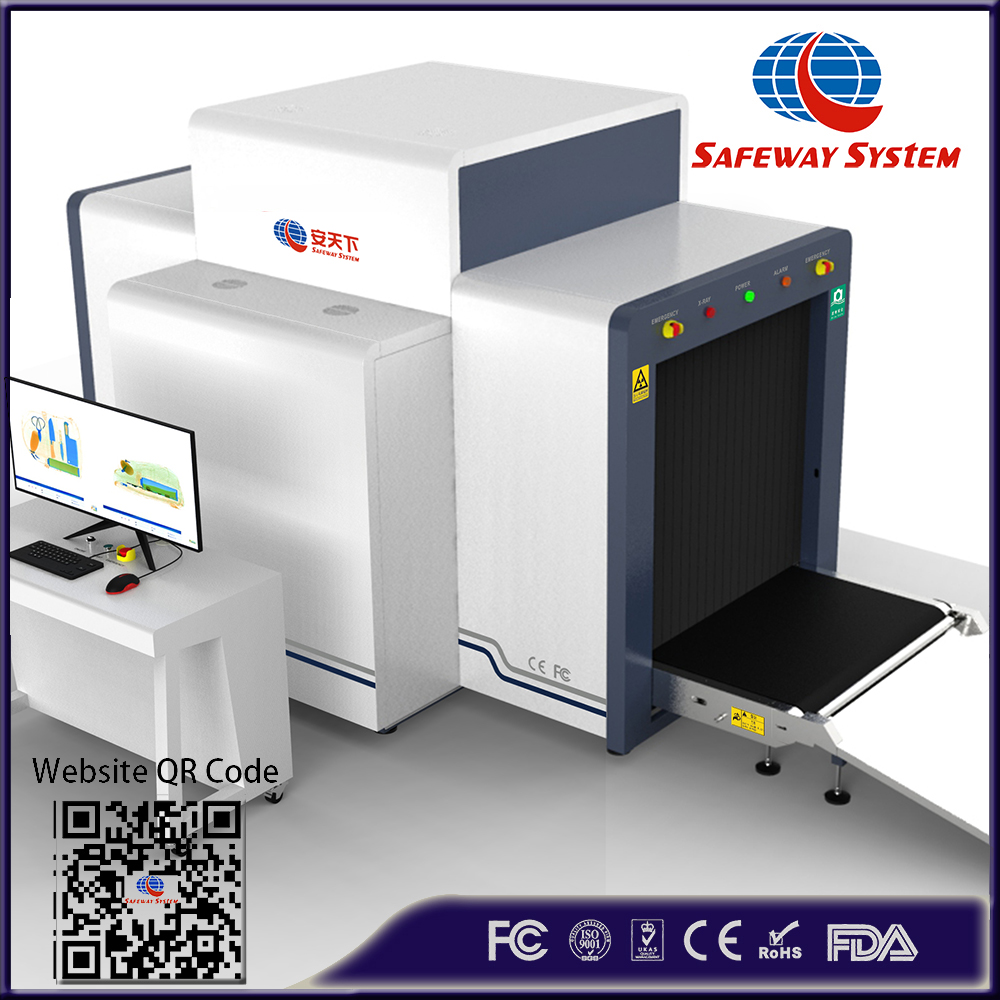
A conveyor x ray scanner represents the backbone of permanent security checkpoints. These systems are designed for relentless, continuous operation in climate-controlled environments, providing the highest possible throughput for mass screening operations.
The architecture of a fixed unit relies on a stationary generator, linear detector arrays, and continuous belt movement. The generator sits either at the bottom or the side of the tunnel, emitting a continuous fan beam of x-rays. As the motorized belt pulls the object through this beam, the L-shaped detector array on the opposite side captures the attenuated photons line by line. The system's image processing software stitches these lines together in real-time, presenting a seamless, scrolling image to the operator. This continuous fan-beam architecture ensures uniform image quality regardless of the object's placement on the belt. The generators are typically oil-cooled to manage the massive thermal load generated by continuous x-ray emission.
Fixed units are built for volume. Conveyor X-ray scanners support continuous baggage and parcel inspection, with actual throughput determined by belt speed, item size, spacing, operator image review time, and secondary inspection requirements. Larger luggage and cargo screening systems may process fewer items per hour because of heavier loads and longer handling cycles. Belt speed plays a critical role here, typically running at 0.20 to 0.22 meters per second. This speed is specifically calibrated to match the integration time of the detector array. If the belt moves too fast, the image distorts; if it moves too slow, throughput plummets. The heavy-duty motors driving these belts are engineered to run 24/7 without thermal shutdown, utilizing seamless, anti-static belt materials to prevent image artifacts.
Modern fixed units utilize dual-energy or multi-energy systems. The generator emits a broad spectrum of x-ray energies. The detector array features two layers of photodiodes separated by a copper filter. The front layer absorbs low-energy x-rays, while the high-energy x-rays pass through the filter to the back layer. By comparing the high and low energy attenuation, the system's algorithms calculate the effective atomic number (Z-effective) of the materials. The software then maps these numbers to a standard color palette: orange for organics, blue for dense metals, and green for mixed or inorganic materials. This helps operators distinguish organic materials from metallic and inorganic objects, making unusual material combinations and concealed threats easier to identify during image review.
Advanced conveyor X-ray scanners may include Threat Image Projection (TIP), image enhancement, and automated detection software to support operator training, image interpretation, and security screening performance. Threat Image Projection (TIP) software randomly superimposes images of fictitious threats onto the scans of real passenger bags. This keeps operators alert and provides supervisors with measurable performance data. Top vendors differentiate their models through the accuracy of these proprietary algorithms, reducing false alarm rates and providing automated bounding boxes around suspected high-density anomalies. These software libraries require regular updates to recognize emerging threat profiles.
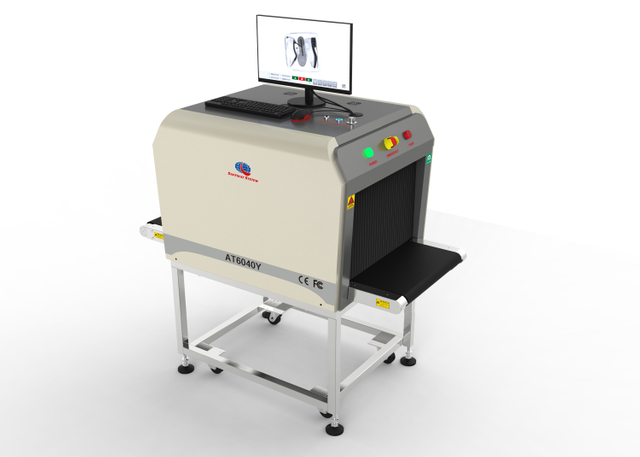
A Portable x ray scanner abandon continuous flow in favor of extreme mobility and tactical flexibility. They are specialized tools designed for investigative screening rather than mass throughput, utilized heavily by specialized response teams and mobile security units.
The form factor of a portable system consists of a separate generator, a flat-panel imaging detector, and a ruggedized laptop. These components pack into transit cases and can be deployed by a single operator in under five minutes. The operator places the imaging panel directly behind the target object and positions the generator in front of it. They then retreat to a safe distance and trigger the x-ray pulse remotely via a wired or wireless connection. This modularity allows operators to screen suspicious packages left in tight corners, vehicles, or abandoned luggage without moving the potentially dangerous item. Wireless communication between the panel and the control laptop often extends up to 50 meters line-of-sight, maximizing operator safety.
Portable units rely entirely on battery power, which introduces specific operational trade-offs. To conserve battery life and maintain a lightweight profile, portable generators typically use pulsed x-ray technology rather than continuous emission. This impacts the maximum kilovoltage (kV) output. While a fixed unit might run a continuous 160kV beam, a portable unit might emit brief 120kV or 150kV pulses. Continuous operating time is limited by battery capacity. Operators must manage battery lifecycles meticulously, ensuring hot-swappable spare batteries are charged and available during extended deployment scenarios. Thermal management is also handled passively, meaning rapid, successive firing can cause the generator to temporarily lock out to prevent overheating.
Portable units are designed for batch or single-item inspection. They are the primary tool for Explosive Ordnance Disposal (EOD) teams, VIP event sweeps, and customs agents inspecting isolated cargo. You cannot process a line of fifty people using a portable scanner. The process of setting up the panel, positioning the generator, clearing the safety zone, and firing the pulse takes several minutes per item. They excel at providing high-resolution, static images of specific, stationary targets, allowing operators to analyze complex internal mechanisms of suspected devices without the blur of a moving belt.
Comparing these two technologies requires looking past basic marketing specifications and evaluating how they perform under physical stress and operational demands in the field.
Steel penetration is the benchmark for x-ray power. A typical 160kV conveyor generator easily penetrates 35mm to 40mm of solid steel, allowing operators to see through thick metal casings, heavy machinery parts, or dense luggage frames. A standard portable pulsed x-ray generator, constrained by size and battery power, typically penetrates 15mm to 20mm of steel. If your threat matrix involves inspecting heavily shielded items or thick-walled cargo containers, the continuous high-power output of a fixed unit is mandatory. Attempting to penetrate a steel drum with a standard portable unit will result in a completely opaque image.
Image acquisition differs fundamentally. Fixed units build an image line-by-line as the object moves. Portable units capture the entire image in a single flash, similar to a digital camera. Portable amorphous silicon detector panels offer exceptional pixel pitch, often resulting in incredibly fine wire resolution capable of detecting 40 AWG wire used in detonators. However, the physical size of the detector panel in portable units limits the size of the object that can be scanned in a single pass. Oversized items require multiple shots and software stitching. Conveyor units are limited only by the tunnel dimensions; long objects can simply roll through the continuous beam.
Operator fatigue directly degrades detection accuracy. Dedicated conveyor operator consoles feature specialized keyboards with physical buttons for image manipulation, including zoom, inverse, and organic stripping. Monitors are mounted at ergonomic heights for prolonged viewing in darkened screening rooms. Portable systems rely on field-expedient ruggedized laptops. Operators often view screens in harsh sunlight or uncomfortable field positions. Vendors differentiate through UI design, but the inherent nature of a fixed console provides a superior environment for extended, fatigue-free image analysis during an eight-hour shift.
Standard fixed conveyor systems require climate-controlled environments. Extreme humidity, dust, or temperature fluctuations can damage their internal electronics and degrade the conveyor belt material. Portable units are built for austere environments. They feature high Ingress Protection ratings against dust and water, often meeting IP65 or IP67 standards. The panels are drop-tested, and the transit cases are highly ruggedized to MIL-STD-810G specifications. If your screening takes place outdoors, on maritime docks, or in unconditioned warehouses, portable units offer the necessary environmental resilience that fixed units lack.
Feature | Conveyor X-Ray Scanner | Portable X-Ray Scanner |
|---|---|---|
Throughput | High (300-500 items/hour) | Low (Batch/Single item processing) |
Generator Power | Continuous (Typically 160kV - 320kV) | Pulsed (Typically 120kV - 150kV) |
Steel Penetration | High (35mm - 40mm+) | Moderate (15mm - 20mm) |
Mobility | Permanent fixed installation | Highly mobile, deployed in minutes |
Power Source | Dedicated AC Mains (110V/220V) | Rechargeable Lithium-Ion Batteries |
Image Acquisition | Line-by-line continuous scanning | Single-flash static capture |
Hardware does not operate in a vacuum. It must integrate into broader facility security architectures and meet strict regulatory mandates enforced by governing bodies.
Regulatory frameworks dictate hardware selection in critical infrastructure. Aviation authorities mandate specific detection standards for primary checkpoint compliance. Fixed conveyor systems undergo rigorous certification processes to meet these standards, proving their ability to consistently identify explosive masses and integrate with automated screening lanes. Portable units, while highly capable, are generally classified for secondary inspection, tactical response, or cargo spot-checking. They rarely meet the continuous screening mandates required for primary airport checkpoints due to their batch-processing nature and lack of automated threat detection algorithms.
Modern security operations rely on data integration. Conveyor systems easily integrate into centralized security networks. They push image data to remote screening rooms where analysts sit away from the noisy checkpoint, utilizing multiplexing technology to route images from multiple lanes to a single operator. They integrate physically with Automated Tray Return Systems to streamline passenger flow. Portable systems are inherently standalone. While they can export images via Wi-Fi or USB for post-incident analysis, they do not integrate into real-time, facility-wide automated routing systems.
Radiation safety protocols differ drastically. A conveyor scanner features built-in lead shielding and lead-impregnated vinyl curtains at the tunnel entry and exit. Built-in shielding and protective curtains help control radiation leakage during normal operation, allowing personnel to work near compliant systems when required safety checks and radiation protection measures are maintained. Portable scanners use open-beam generators. There is no lead tunnel. Safety relies entirely on distance and geometry. Operators must establish a controlled inspection area, keep unauthorized personnel outside the radiation zone, and operate the equipment from a protected location according to the approved radiation safety procedure and the generator's specified beam geometry.
Procurement requires balancing permanent infrastructure commitments against the need for agile, responsive screening capabilities. Facility managers must weigh the logistical burden of installation against the operational flexibility of mobile units.
The logistical trade-off is stark. Permanent, high-throughput infrastructure demands significant planning. Once a fixed system is bolted to the floor, reconfiguring the checkpoint requires heavy machinery, recalibration, and facility downtime. However, it provides unmatched, consistent processing power day after day. Highly versatile equipment offers complete operational flexibility. You can move a portable system from a loading dock in the morning to a VIP entrance in the afternoon. The trade-off for this agility is the inability to process mass crowds efficiently when sudden surges occur.
Fixed systems carry hidden logistical burdens that must be addressed months before delivery. Portable X-ray systems require little permanent infrastructure, but each deployment must provide suitable equipment positioning, a controlled radiation area, and safe access arrangements before inspection begins. Preparing a site for a fixed conveyor system requires executing the following steps:
Verify structural floor load capacities, as lead-lined scanning tunnels frequently exceed standard commercial building limits.
Provide electrical circuits, grounding, and power protection that meet the scanner manufacturer's installation requirements.
Measure all transit doorways and elevator cabs along the delivery route to ensure the scanner frame can physically reach the installation point.
Modify local HVAC zones to handle the continuous thermal output generated by high-kilovoltage x-ray tubes running at peak capacity.
Preventative maintenance schedules look very different. Conveyor systems have moving parts. They require regular belt tracking adjustments, roller replacements, motor servicing, and scheduled lubrication. Software upgrade paths for threat detection algorithms must be managed by IT departments. Portable systems have no moving parts. Maintenance focuses on battery lifecycle management, ensuring lithium-ion cells are replaced before they degrade and fail to hold a charge. The imaging panels require periodic pixel calibration to prevent dead zones, and the ruggedized laptops need standard operating system security patches.
Even the best hardware fails if deployed without addressing operational realities. Anticipating these risks prevents severe checkpoint failures and security breaches.
Deploying a system that cannot handle peak volume creates dangerous crowd build-ups outside the secure perimeter. Mitigation involves conducting strict time-in-motion studies prior to procurement. Measure exactly how many bags pass through your facility during the busiest fifteen minutes of the day. Multiply that out to an hourly rate. Ensure the chosen system's belt speed and the operator's image analysis time can comfortably exceed that peak demand for both carry-on and checked items without forcing operators to rush their analysis.
Hardware is only as good as the operator analyzing the screen. Mitigation requires implementing rigorous, system-specific training. Interpreting portable x-ray images often requires different spatial reasoning than interpreting continuous conveyor images. Portable images are static and captured from a single angle; operators must understand how to reposition the panel and generator to get orthogonal views of a complex device. Conveyor operators must master the use of image enhancement filters while the belt is moving, requiring rapid decision-making skills.
Mishandling x-ray equipment exposes staff to unnecessary radiation and invites severe regulatory penalties. Mitigation involves strict adherence to local regulatory site surveys for fixed units. Ensure lead curtains are inspected daily for tears or missing strips, replacing them immediately if damaged. For portable unit deployment, establish rigid exclusion zones. Train tactical operators to calculate safe distances based on the inverse-square law and to always position themselves behind the directional emission of the pulsed generator during operation.
There is no universal superior choice. The decision between a portable vs conveyor x ray scanner is dictated entirely by the operational environment's demand for continuous throughput versus geographical flexibility. Fixed systems dominate permanent checkpoints requiring mass processing and deep penetration. Portable systems rule the tactical space, offering unmatched mobility and rapid deployment for isolated threats.
Opt for a conveyor x ray scanner for permanent checkpoints, mailrooms, and high-traffic entrances where bags flow constantly. Select a portable scanner for tactical deployments, temporary event security, EOD teams, and unpredictable screening locations where targets cannot be moved.
Execute a comprehensive site survey to measure physical constraints, power availability, and floor load capacities before selecting a fixed unit.
Calculate peak-hour throughput requirements using time-in-motion studies to ensure the hardware handles your facility's busiest periods without bottlenecking.
Request a live imaging demonstration utilizing inert samples of your specific threat matrix to evaluate vendor-specific imaging chain performance.
Establish a strict recurrent training program focused on spatial reasoning and image interpretation specific to the exact form factor you deploy.
A: Conveyor systems handle 300 to 500 carry-on bags per hour continuously, relying on motorized belts for constant flow. Portable systems are manual, batch-process units. Setting up the panel, positioning the generator, and clearing the area takes several minutes per scan, resulting in significantly fewer items processed per hour.
A: Both detect material density, but fixed systems feature superior multi-energy material discrimination algorithms. Their larger, continuous generators and advanced dual-energy imaging chains accurately assign color codes to organic, inorganic, and metallic materials. Portable units excel at high-resolution static imaging but possess less complex material discrimination capabilities.
A: Fixed conveyor units require dedicated 110V or 220V AC mains power. They draw significant amperage to run continuous generators and heavy-duty motors, demanding isolated circuits to prevent power fluctuations. Portable units operate entirely on rechargeable lithium-ion battery platforms, requiring no external power during field deployment.
A: Baggage scanners use dual-energy technology to compare high and low energy x-ray attenuation. The algorithms calculate the effective atomic number of the scanned object. The system assigns colors based on these numbers: orange for organics, blue for metals, and green for inorganics. Scanners measure density and atomic structure; they do not identify specific chemical compounds.
A: Portable units are highly effective for secondary inspection, cargo spot-checks, or tactical EOD response. They generally do not meet the continuous screening mandates, throughput requirements, or automatic threat detection software standards required by aviation authorities like the TSA or ECAC for primary airport passenger checkpoints.
A: The typical lifespan of a fixed generator ranges from 5 to 10 years. This timeframe depends on total operational hours, strict adherence to preventative maintenance schedules, and facility environmental conditions. Proper climate control and clean power supplies significantly extend the operational life of the generator tube.
 English