Views: 0 Author: Site Editor Publish Time: 2026-11-27 Origin: Site
X ray scanner tunnel determines the dimensions of baggage and parcels a screening machine can accommodate, while conveyor capacity, imaging performance, and checkpoint workflow influence its overall screening efficiency.When facility operators design a screening lane, the physical opening of the inspection machine serves as the primary bottleneck or the primary enabler of pedestrian flow. Selecting an undersized machine creates severe bottlenecks and forces manual bag checks. Oversizing wastes critical floor space and increases structural load unnecessarily. To optimize security infrastructure, facility managers must map their specific baggage profiles, weight capacities, and throughput requirements to the industry-standard x ray scanner tunnel size options: 5030, 6550, 8065, and 100100. Matching the machine to the environment ensures security personnel maintain a continuous flow of visitors, employees, or cargo without compromising screening integrity.
5030 (500x300mm): Strictly for mailrooms, VIP entrances, and small personal items; cannot accommodate standard carry-on luggage and has low conveyor weight limits.
6550 (650x500mm): The industry standard for corporate lobbies, courthouses, and public buildings processing backpacks and carry-ons, pairing easily with standard walk-through metal detectors.
8065 (800x650mm): Built for transport hubs and hotels requiring clearance for large, checked suitcases and irregular items.
100100 (1000x1000mm): Designed for heavy logistics, cargo screening, and oversized freight, requiring significant floor space, heavy-duty rollers, and dedicated power infrastructure.
Table of Contents
The security screening industry utilizes a standardized naming convention that directly correlates model numbers to the physical opening of the inspection chamber. These numbers represent the width and height of the tunnel in millimeters. A 5030 system features an opening 500 millimeters wide and 300 millimeters high. A 100100 system offers a 1000-millimeter by 1000-millimeter clearance. These model numbers provide a quick reference for nominal tunnel dimensions. Before specifying equipment, verify the manufacturer's actual tunnel opening and usable clearance to ensure the intended baggage can pass through the protective curtains without obstruction.
Tunnel capacity interacts directly with conveyor belt speed to determine the maximum number of bags a checkpoint processes per hour. Industry-standard conveyor belts operate at speeds between 0.20 and 0.23 meters per second. While belt speed remains relatively constant across different machine sizes, tunnel dimensions dictate how items must be oriented. If a tunnel is too narrow, operators spend time repositioning bags or feeding them one by one with significant spacing. A properly sized tunnel allows items to flow continuously. This enables a theoretical throughput of up to 720 items per hour. Practical operational speeds typically hover around 300 to 400 items per hour based on the operator's image analysis proficiency and the physical spacing of the bags on the belt.
The physical dimensions of the inspection chamber directly correlate with the machine's maximum load-bearing capacity. Manufacturers engineer the internal conveyor motors, belt tensioners, and steel support rollers to match the expected volume of the tunnel. Conveyor load capacity depends on the motor, belt, roller, and frame design rather than tunnel dimensions alone. Compact scanners may be configured for relatively heavy items, while larger tunnels often use reinforced conveyor systems for bulkier baggage or cargo. Exceeding the manufacturer's rated load can cause belt slippage, excessive motor strain, and conveyor damage. Belt tracking also becomes more complex on wider machines, requiring heavier rollers to keep the belt centered under heavy loads.
Procuring a smaller machine to save floor space often results in severe operational friction. When visitors attempt to force oversized bags into a restricted tunnel, items become wedged against the internal sensors or lead curtains. This triggers automatic system halts. Security personnel must physically extract the jammed item, reset the system software, and perform a manual physical inspection of the bag. This process completely stops the screening lane. It causes immediate queues and frustrates visitors. Accurately matching the tunnel dimensions to the largest expected common item eliminates this friction and keeps the checkpoint moving.
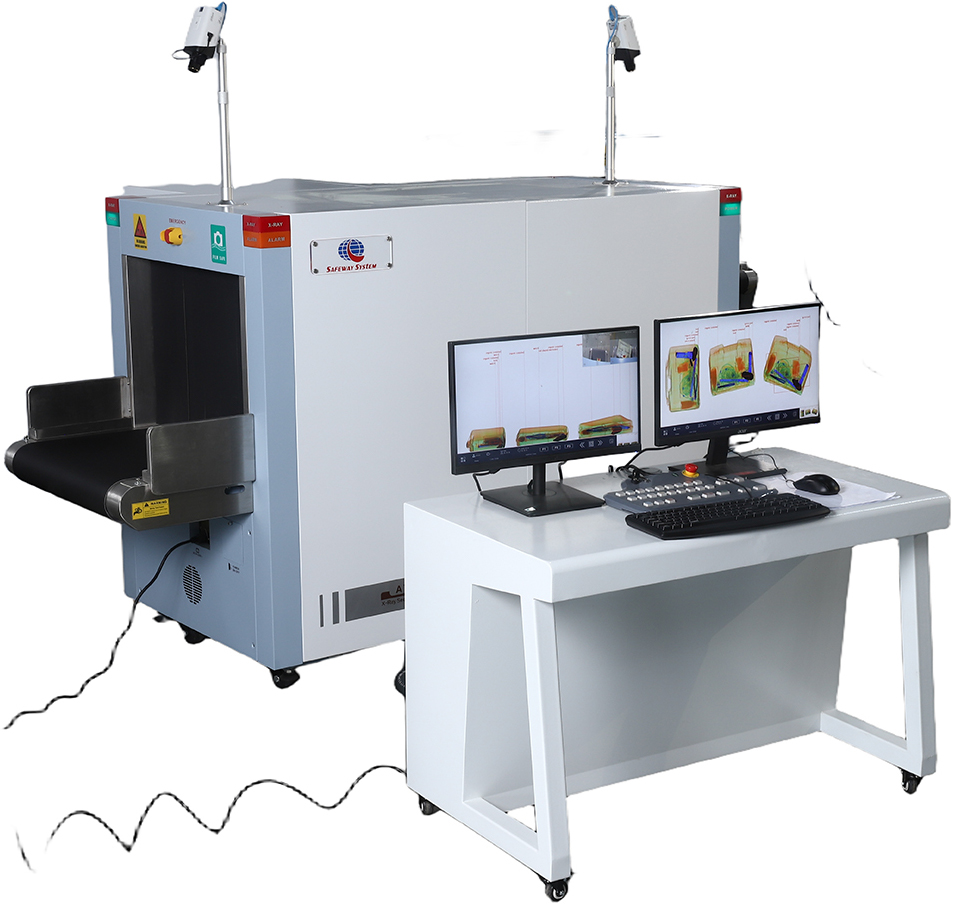
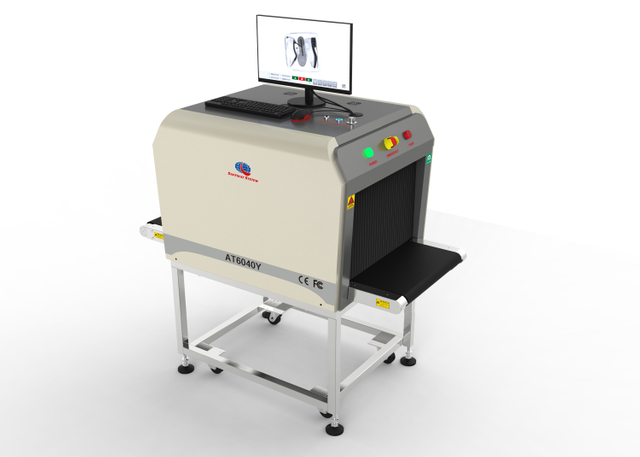
The 5030 model represents the most compact tier of conventional conveyor-based screening systems. Its minimal footprint makes it the preferred choice for environments where floor space is heavily restricted and the threat profile is limited to small, hand-carried items. Corporate mailrooms utilize these units to screen incoming parcels and courier deliveries for contraband or explosive devices. VIP private entrances, boutique retail loss prevention checkpoints, and secondary school entrances also deploy the 5030. Its unobtrusive physical presence and quiet operation fit well in low-profile security environments.
This specific machine is strictly engineered for small-scale screening. The target baggage profile includes women's handbags, small briefcases, loose winter jackets, tablets, and standard cardboard parcel deliveries. The 300-millimeter height restriction means that even a moderately stuffed backpack may snag on the entry curtains. If a bag blocks the internal light barriers for too long, it triggers a false jam alert and stops the belt.
Due to their compact nature, 5030 systems are limited to lighter conveyor loads, strictly capped under 50 kilograms. To maintain a small internal cabinet, these machines frequently utilize lower-output X-ray generators, typically ranging from 80kV to 140kV. They feature dual-energy imaging to differentiate between organic and inorganic materials. However, the lower penetration power is optimized for thin parcels and light bags. They lack the deep material discrimination capabilities required to punch through thick layers of dense clothing or heavy electronics found in larger luggage.
The primary implementation risk of deploying a 5030 system is the high probability of frequent bottlenecks if visitors arrive with standard travel luggage. Many standard hard-shell carry-on suitcases cannot pass through a 300-millimeter-high tunnel without exceeding the available clearance, making the 5030 more suitable for handbags, briefcases, and small parcels. Facility managers must enforce strict communication of baggage policies prior to visitor entry. The security checkpoint must be staffed with additional personnel dedicated to a manual secondary screening protocol for any item that exceeds the machine's physical limits. Operators also need to monitor the entry point closely to prevent users from forcing oversized items into the lead curtains.
Security integrators deploy the 6550 as the baseline for pedestrian checkpoints. It offers the optimal balance between physical footprint and versatile screening capacity. This model is the default specification for courthouses, municipal government buildings, museums, public libraries, and standard corporate security lobbies. It provides enough clearance to handle the vast majority of items carried by daily commuters and day-trip visitors without dominating the architectural space of a building's entrance.
A 650-millimeter by 500-millimeter opening comfortably accommodates standard airline-approved carry-on luggage. It easily processes large tactical backpacks, overstuffed laptop bags, heavy winter coats, and medium-sized cardboard boxes. The 500-millimeter height allows bags to pass through standing upright or laying flat. This gives operators flexibility in how items are oriented on the belt to achieve the best possible imaging angle for threat detection. Proper orientation reduces the need to rescan items.
One of the most significant advantages of the 6550 is its integration into standard security lane layouts. The external width of a 6550 machine typically aligns perfectly with the external footprint of a standard Walk-Through Metal Detector (WTMD). This dimensional harmony allows security architects to design parallel security lanes. Pedestrians place their bags on the conveyor and step laterally through the metal detector without navigating awkward spatial choke points. You can easily add stainless steel divesting tables to the entry and exit points without disrupting the linear flow of the checkpoint.
While highly versatile, the 6550 struggles with oversized checked luggage or large rigid transit boxes. Oversized or rigid luggage may exceed the 6550 tunnel's available width or height, increasing the risk of conveyor jams and damage to the protective curtains if operators attempt to force items through. The 6550 is ideal for pedestrian-heavy checkpoints where extended travel luggage is not expected. If the facility routinely hosts travelers arriving directly from airports, a larger model is mandatory. Maintain the equipment separation specified in the scanner and WTMD installation guidelines to prevent interference and preserve a clear, safe passage through the security checkpoint.
When the operational environment shifts from daily commuters to transient travelers, the 8065 becomes the necessary baseline. This model is engineered specifically for facilities that process individuals carrying full-sized travel gear. High-capacity hotels, regional railway stations, cruise ship terminals, and large event arenas rely on the 8065 to maintain throughput when visitors arrive with comprehensive luggage sets. It bridges the gap between standard pedestrian screening and heavy cargo inspection.
The 800-millimeter wide by 650-millimeter high tunnel is designed to clear large checked suitcases, heavy duffel bags, and medium-sized freight boxes. It excels at processing irregular items that commonly cause issues at smaller checkpoints. Collapsed baby strollers, professional camera equipment hard cases, and musical instruments pass through easily. The internal conveyor systems on these units are upgraded to handle consistent loads of up to 150 kilograms. This ensures smooth operation even when multiple heavy suitcases are placed on the belt simultaneously.
The increased capability of the 8065 comes with a substantial physical footprint. The machine requires wider checkpoint lanes, significantly longer entry and exit roller tables, and a larger dedicated operator workstation. The sheer weight of the machine itself often exceeds 800 kilograms due to the extensive lead shielding required for the larger opening. Facility managers must conduct a thorough site survey to ensure adequate physical clearance. You must verify the floor load-bearing capacity of the installation site. Moving these units into place often requires removing standard double doors or utilizing heavy-duty equipment casters during installation.
The 100100 model is a heavy-duty industrial screening solution. It is entirely unsuited for standard office lobbies and is instead deployed in high-volume logistics and border security environments. Airport cargo facilities, customs border checkpoints, bonded logistics centers, and warehouse shipping docks utilize the 100100 to inspect bulk shipments before they are loaded onto aircraft or permitted entry into a country. These machines serve as the final line of defense in global supply chain security.
With a massive one-meter by one-meter opening, this machine is built for oversized cargo, palletized goods, heavy freight, and large consolidated shipments. It allows logistics operators to screen entire shrink-wrapped skids of smaller boxes without breaking down the shipment. This drastically reduces inspection times and labor requirements. The conveyor bed is often positioned lower to the ground to facilitate easier loading from forklifts or adjacent gravity roller conveyors.
Because the inspection chamber covers a massive physical area, the sensor arrays capture an enormous amount of raw data. To render high-resolution, multi-energy grey level and color images without system lag, these units require highly capable internal architecture. Modern 100100 scanners use dedicated image-processing hardware and software to handle detector data in real time, supporting continuous scanning, image enhancement, and material discrimination during large-cargo inspection. Without this processing power, the conveyor would have to stop continuously to allow the computer to catch up with the physical scanning process. Operators frequently use advanced image manipulation tools, such as organic stripping and inverse video, to analyze dense cargo pallets.
Deploying a 100100 system introduces major infrastructural challenges. The maximum power draw is significant. These machines typically utilize 160kV or even 180kV generators to penetrate dense cargo. They present extreme structural weight, often weighing well over a metric ton. Installation may require dedicated electrical circuits, structural load verification, and suitable lifting equipment to accommodate the scanner's actual power demand, weight, and overall dimensions. Analyzing complex, densely packed cargo images requires specialized operator training far beyond standard pedestrian bag screening. You must also account for the massive radiation scatter footprint, requiring extended lead curtains and restricted operator zones at the entry and exit points.
The ultimate goal of selecting the correct tunnel dimension is achieving a 99% clearance rate without manual intervention. A successful deployment allows the security team to maintain a continuous, uninterrupted flow of bags during peak traffic hours. Every time an operator must stop the belt, reverse a bag, or perform a manual search because an item is too large or too dense, the efficiency of the entire checkpoint degrades. Defining success means matching the physical opening to the 99th percentile of expected baggage sizes. You must design the checkpoint around the largest item you expect to see daily.
Evaluating a machine requires looking beyond the tunnel dimensions to the external footprint of the entire system. Larger tunnels require substantially larger external cabinets to house the necessary lead shielding that protects operators from radiation scatter. Larger machines mandate longer entry and exit conveyor rollers to support heavy items before and after they pass through the lead curtains. A 100100 machine may require an operational length of over three meters. This drastically alters the architectural flow of a loading dock or terminal. You must measure the entire operational footprint, including the operator's desk and the bag search tables.
Model | Tunnel Size (mm) | Max Load (kg) | Primary Use Case | Generator (Typical) |
|---|---|---|---|---|
5030 | 500 x 300 | ~50 kg | Mailrooms, VIP Lobbies | 80kV - 140kV |
6550 | 650 x 500 | ~100 kg | Corporate Lobbies, Courts | 140kV - 160kV |
8065 | 800 x 650 | ~150 kg | Hotels, Train Stations | 160kV |
100100 | 1000 x 1000 | 200+ kg | Cargo, Logistics Docks | 160kV - 180kV |
The size of the screening machine dictates the holistic checkpoint design. A 6550 allows for a neat, parallel alignment with walk-through metal detectors. Larger units like the 8065 often force staggered layouts. When the X-ray machine is significantly wider than the metal detector, it creates dead space and spatial choke points. This staggered layout requires deploying additional security personnel to monitor the expanded footprint. Guards must ensure pedestrians do not bypass the metal detector while waiting for their oversized luggage to clear the scanner. You must map the pedestrian walking path to prevent cross-traffic collisions.
Selecting a larger machine involves significant infrastructure upgrades. A larger system consumes substantially more electricity due to the high-output generators and heavy-duty conveyor motors. A 100100 unit running a 180kV generator generates considerable heat during continuous operation. You must ensure the installation environment has adequate HVAC cooling to prevent the internal electronics from overheating. Smaller 5030 and 6550 units typically run on standard 110V or 220V wall outlets. The larger 8065 and 100100 systems often require dedicated circuits hardwired directly to the facility's main breaker panel to handle the initial motor startup surge.
Larger tunnels require stronger X-ray generators to achieve necessary penetration specifications. The X-ray source is positioned further away from the detector arrays in a 100100 compared to a 5030. The beam must travel through more air and thicker items. Larger tunnels may require higher-output X-ray generators to maintain adequate penetration and image quality when inspecting bulky or dense cargo. Generator voltage, steel penetration, wire resolution, and electrical supply requirements must be verified against the specific scanner model and its intended screening application. You must verify that the machine meets local aviation or federal security standards for material discrimination before installation.
To finalize your procurement and installation strategy, execute the following next steps:
Measure the exact dimensions and weight of the largest common items entering your facility during peak traffic hours.
Verify the floor load-bearing capacity of your proposed installation site with a structural engineer, especially for 8065 and 100100 models.
Map out the security lane layout using floor tape to confirm adequate clearance for the machine, the operator workstation, and pedestrian flow.
Audit your electrical panels to ensure you have sufficient dedicated circuits to handle the startup surge of high-kV generators.
A: These numbers represent the physical width and height of the machine's internal inspection tunnel in millimeters. A 6550 model has a tunnel opening 650 millimeters wide and 500 millimeters high. This measurement dictates the absolute maximum size of any object that can pass through the scanner.
A: Most standard hard-shell carry-on suitcases are better suited to larger tunnel openings such as 6550. A 5030 scanner has a nominal opening of 500 × 300 mm, so suitcase width, thickness, and orientation must be checked before screening.
A: Measure the maximum dimensions and weight of the most common large items entering the facility during peak hours. Once you have the dimensions of your largest standard item, add a 10% clearance margin. This ensures smooth conveyor flow without snagging on the lead curtains.
A: Yes. Larger tunnels utilize higher-kV generators to push X-rays through thicker, denser items and across a wider physical gap. This draws more electrical power and requires advanced internal CPUs to process the larger volume of image data. You will need dedicated circuits for these machines.
A: Passenger security checkpoints typically use 6550 models or slightly larger custom variants to process carry-on bags and bins. For checked baggage and heavy cargo facilities, airports rely on much larger 8065 or 100100 systems to handle oversized luggage and palletized freight.
 English