Views: 0 Author: Site Editor Publish Time: 2026-11-27 Origin: Site
To understand how to choose x ray baggage scanner, start with the facility's screening volume, typical item dimensions, detection requirements, and applicable security standards. Airports prioritize approved screening technology, high throughput, and advanced threat detection; hotels need compact, efficient systems for guest luggage and visitor screening; logistics centers require larger tunnels, higher conveyor load capacities, and sufficient penetration for dense cargo. Matching these requirements to the right x ray baggage scanner helps maintain reliable security screening without unnecessary equipment costs or operational delays.
Generator power, tunnel dimensions, and imaging technology must match specific facility demands perfectly. Failing to align these technical factors leads to severe operational bottlenecks, frustrated personnel, or regulatory compliance failures. You need a clear framework on how to choose x ray baggage scanner systems for various environments. Understanding the underlying physics of penetration, the mechanics of conveyor systems, and the capabilities of modern detection software allows facility managers to deploy security infrastructure that enhances safety without impeding operational flow.
Application Dictates Specification: Tunnel size and generator power (kV) must be mapped directly to the maximum parcel dimensions and density expected at the facility.
Compliance is Non-Negotiable: Aviation and high-security logistics require systems meeting specific regulatory standards (e.g., TSA, ECAC Standard 3), whereas hospitality focuses on footprint and aesthetic integration.
Imaging Technology Drives Throughput: The shift from single-view to dual-view or 3D CT technology significantly reduces manual secondary inspections, lowering operational bottlenecks.
Table of Contents
Establishing baseline success criteria based on the operational environment prevents procurement mistakes. You must evaluate your facility's unique physical and regulatory demands before reviewing technical hardware specifications. A system designed for a warehouse will fail in a hotel lobby. A commercial office scanner cannot handle the rigors of an international airport terminal.
Aviation environments demand strict regulatory compliance and high-volume processing capabilities. Mandatory adherence to TSA standards in the United States or ECAC standards in Europe dictates equipment selection for both cabin and hold baggage screening. Throughput demands are exceptionally high. High-speed conveyor systems operating between 0.20 and 0.23 meters per second prevent passenger bottlenecks during peak morning and evening departure banks.
Detection mandates require advanced explosives detection systems integrated directly into the hardware. Liquid, aerosol, and gel screening capabilities remain essential for modern aviation checkpoints. Aviation scanners must often integrate seamlessly with automated tray return systems. This requires specialized communication protocols between the scanner's internal programmable logic controller and the external tray tracking mechanisms. Bags must be properly indexed and diverted automatically if a threat is detected. We often see facilities fail because they buy a standalone scanner that cannot handshake with their existing tray return network.
Hospitality and commercial sectors face entirely different security challenges. Spatial and aesthetic constraints drive procurement decisions here. Facilities need compact footprints, standard 110V/220V power compatibility, and whisper-quiet operation. Equipment designs must not disrupt architectural aesthetics or degrade the premium guest experience. Mobile and temporary deployments often require specialized caster-wheeled units. Van-mounted mobile systems allow rapid, tactical deployment at special events, concerts, or VIP summits.
The threat profile in hospitality focuses heavily on conventional weapons, contraband, and unauthorized recording devices rather than complex explosive compounds. Usability is paramount. Intuitive software interfaces help contracted security staff operate the machines effectively. Clear color-coding and simplified control panels reduce the cognitive load on operators working long shifts in busy lobbies. You want a machine where a new guard can understand the basic organic versus inorganic color mapping within an hour of hands-on practice.
Industrial environments prioritize extreme durability, heavy load capacities, and deep material penetration. Conveyor belts must handle massive, unevenly distributed loads, often exceeding 200 kilograms per item. Reinforced steel chassis withstand the daily physical rigors of forklift proximity and warehouse operations. High-density screening capabilities are mandatory for cargo applications. Scanners must penetrate thick wooden pallets, bulk liquid goods, and dense metal machine components to verify shipping manifests.
System integration streamlines warehouse operations and maintains chain of custody. Compatibility with automated sorting systems, inline barcode scanners, and enterprise warehouse management software ensures seamless tracking across the supply chain. Cargo scanners often require custom-built roller tables rather than standard flat belts. Roller tables facilitate the movement of heavy, awkward freight into the inspection tunnel without causing operator strain or equipment damage.
Translating hardware specifications into operational outcomes ensures you select the right x ray baggage scanner for your facility. Understanding the physical limitations and capabilities of different components prevents under-speccing or over-speccing your security checkpoint.
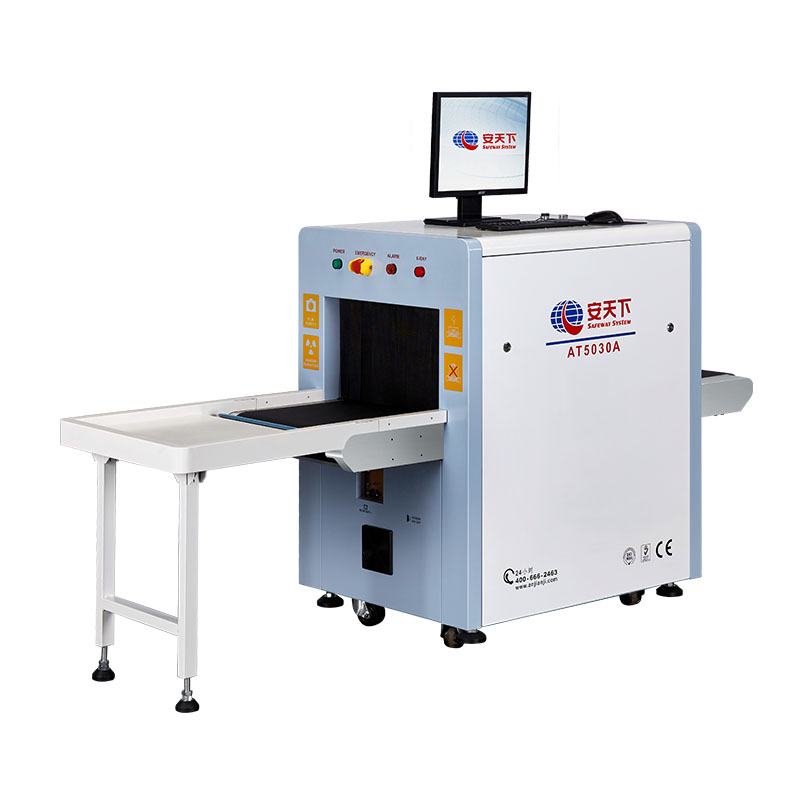
Tunnel dimensions must match the 99th percentile of expected item sizes at your facility. A 5030 scanner, measuring 50cm wide by 30cm high, perfectly suits mailrooms and handbag inspections. A 6040 model handles standard cabin baggage and backpacks. Larger 100100 and 180180 scanners are used for oversized cargo, with pallet compatibility determined by the actual tunnel clearance, loaded pallet dimensions, and conveyor weight capacity. You must account for the "corner clipping" phenomenon. This happens when a rigid bag technically fits the maximum width and height but snags on the corners of the lead curtains, causing jams inside the tunnel.
Evaluating conveyor height ensures ergonomic loading for operators and guests. You must also check maximum distributed load capacities on the motor specifications. Overloading a conveyor belt leads to premature motor burnout, stretched drive belts, and potential operator injury. Heavy-duty applications require variable frequency drives to manage the torque required to move massive pallets from a standstill.
Kilovoltage ratings determine the raw penetration capabilities of the system. Higher kilovoltage produces shorter wavelength x-rays, which penetrate denser materials more effectively. Standard baggage scanners commonly use X-ray generators in the 140–160 kV range, while some cargo inspection systems use higher-voltage or multiple-generator configurations for denser loads. Actual penetration performance should be assessed using the manufacturer's verified steel penetration, wire resolution, and imaging specifications.
Steel penetration metrics indicate the system's ability to image through solid metal. This metric, measured in millimeters of solid steel, proves necessary for detecting hidden threats behind dense shielding or inside metal electronics enclosures. Wire resolution is equally important for threat detection. The American Wire Gauge rating ensures the detection of fine copper wires used in detonators and improvised explosive devices. High-quality sensors combined with optimized generator milliamperage provide the contrast necessary to distinguish these fine details.
Selecting the right imaging technology directly impacts checkpoint throughput and detection accuracy. Single-view systems offer standard top-down or side-shoot imaging. They suit low-threat environments and basic access control where secondary manual inspections are acceptable. Dual-view systems utilize two independent generators. They provide horizontal and vertical images simultaneously on dual monitors. The two viewing angles reduce object overlap and improve the visibility of concealed items, helping operators identify suspicious objects with fewer manual repositioning and rescanning operations.
Computed Tomography provides advanced 3D volumetric imaging. The gantry rotates around the item, capturing hundreds of slices. Operators can rotate the composite 3D image on-screen to inspect complex electronics or crowded bags from any angle. 3D CT technology supports advanced aviation screening requirements by providing volumetric images and automated threat analysis, helping reduce unnecessary bag checks when deployed with approved equipment and operating procedures.
Technology Type | Primary Application | Detection Capability | Throughput Impact |
|---|---|---|---|
Single-View | Hotels, Corporate Offices, Mailrooms | Basic 2D imaging, suitable for large distinct threats | Moderate (frequently requires bag repositioning) |
Dual-View | Critical Infrastructure, Customs, High-Security | Simultaneous vertical and horizontal 2D imaging | High (eliminates blind spots, fewer rescans) |
3D CT | Airports, High-Threat Aviation | Volumetric 3D rotation, advanced material analysis | Very High (reduces secondary manual inspections) |
Hardware provides the raw image, but software enhancements reduce the cognitive load on operators and drastically improve detection rates. Modern security screening relies heavily on digital processing to highlight anomalies that the human eye might miss during a long shift.
Dual-energy X-ray scanners compare attenuation at different X-ray energies to estimate material characteristics, including effective atomic number. Image-processing software classifies objects into broad material groups, such as organic, inorganic, and metallic materials, using color coding to help operators identify unusual shapes and potential threats.
Image enhancement tools provide critical support for the operator. Features like organic stripping remove clothing and plastics from the screen, leaving only metal objects visible. Pseudo-color mapping applies high-contrast colors to different material categories. Edge enhancement sharpens the outlines of overlapping objects, while variable contrast allows the operator to peer through dense areas of the bag without losing visibility of lighter items.
Machine learning algorithms automatically analyze the x-ray feed to highlight potential firearms, knives, and lithium batteries. Algorithm accuracy directly impacts security outcomes and operational flow. These AI models are trained on vast databases of threat images, allowing them to recognize weapon profiles even when disassembled or viewed from unusual angles.
Balancing high detection sensitivity with operational efficiency remains a priority. High false alarm rates lead to excessive manual bag checks, slowing down the entire screening process and causing operator fatigue. Modern AI systems allow administrators to adjust sensitivity thresholds based on the current threat level, ensuring the checkpoint remains both secure and fluid.
Centralized monitoring connects multiple scanning units to a single, secure control room. This multiplexing approach optimizes staffing by allowing a small team of expert analysts to review images from several checkpoints simultaneously. It also isolates the image reviewer from the chaotic environment of the physical checkpoint, improving focus and decision-making.
Threat Image Projection artificially inserts fictitious threat images into routine baggage scans. This software feature tests operator vigilance and maintains compliance during long shifts. If the operator flags the projected threat, the system congratulates them and logs the success. If they miss it, the system pauses the belt, notifies the supervisor, and records the failure for future training interventions.
Modern scanners connect to facility networks, introducing significant cyber risks. Data encryption protects scanned images and metadata in transit and at rest. This protection is vital for government installations or high-profile commercial deployments where passenger privacy is paramount.
Operating system hardening prevents unauthorized access to the scanner's internal computer. You must evaluate the underlying operating system for vulnerability management, patch availability, and network isolation capabilities. Scanners running outdated, unsupported operating systems present a massive vulnerability to the wider facility network and must be isolated via strict firewall rules or air-gapped entirely.
Avoiding common deployment failures during installation and commissioning requires meticulous planning. The physical realities of moving and installing heavy scanning equipment often present unexpected challenges that can delay facility openings.
Structural integrity must support the equipment safely. Calculate static and dynamic floor loading requirements for heavy dual-view or CT scanners, which can weigh several tons. Raised floors in modern office buildings often require steel reinforcement plates to distribute the load safely.
Access routes require careful measurement and planning. Ensure facility doors, elevators, and hallways can accommodate the physical dimensions of the scanner during delivery and rigging. Moving a 1,500-kilogram scanner through a standard commercial door often requires specialized rigging equipment, temporary door frame removal, and precise maneuvering.
Measure all choke points from the loading dock to the final installation site.
Verify elevator weight capacities and interior cabin dimensions.
Assess floor composition for necessary reinforcement.
Plan dedicated electrical circuits to avoid power fluctuations.
Power requirements dictate installation logistics and facility preparation. Assess single-phase versus three-phase power needs before finalizing equipment selection. Uninterruptible Power Supply integration protects sensitive x-ray generators and internal computers from destructive voltage spikes and brownouts.
Operating environment tolerances matter immensely. Evaluate temperature and humidity ratings, especially for logistics centers lacking climate control or outdoor event deployments. Extreme heat causes generator thermal faults, while high humidity leads to condensation on sensitive sensor arrays. Specialized environmental enclosures or internal HVAC units may be necessary for harsh deployments.
Radiation safety protects operators, facility staff, and the general public. Verify the system meets local and federal radiation leakage standards before commissioning. For example, U.S. FDA regulations under 21 CFR 1020.40 limit radiation emission from cabinet X-ray systems to 0.5 mR in one hour at 5 cm outside the external surface. Equipment must also satisfy the radiation safety requirements applicable in its installation jurisdiction.
Establish radiation safety procedures covering leakage testing, protective curtain inspections, equipment interlocks, and operator training. Personal dosimetry and periodic radiation surveys should follow the applicable regulations and the facility's radiation safety assessment. Ensure all lead curtains remain intact and replace them immediately if they show signs of tearing or excessive wear.
The checkpoint ecosystem relies on physical and digital synergy. Design the physical layout to integrate the scanner seamlessly with Walk-Through Metal Detectors and Explosive Trace Detection swabbing stations. Divestment tables must align perfectly with the conveyor flow to prevent luggage jams and passenger confusion.
Data integration connects scanner metadata with overarching facility security systems. Connecting the scanner's output with overhead CCTV systems provides comprehensive incident auditing. If an item goes missing or a threat is detected, synchronized video and x-ray logs provide an unbroken chain of custody for security investigations.
Conduct a physical site survey to map exact spatial constraints, access routes, and floor loading limits before selecting equipment.
Request a live demonstration of the software interface using your facility's typical baggage profiles to validate detection accuracy and operator usability.
Verify the manufacturer's local technician footprint and parts availability to guarantee rapid response times during hardware failures.
Establish a standardized training protocol utilizing Threat Image Projection to maintain operator vigilance and regulatory compliance.
A: Standard sizes vary by application. A 50cm x 30cm tunnel suits mail and small bags. A 60cm x 40cm tunnel handles standard cabin baggage. Industrial applications require 100cm x 100cm or larger tunnels for heavy cargo and standard shipping pallets.
A: Single-view scanners use one generator to produce a 2D image from a single angle. Dual-view scanners use two generators to provide two simultaneous perspectives, usually top and side. This reduces blind spots and the need to rescan items.
A: The required steel penetration depends on the density and composition of the cargo being inspected. For dense industrial goods, compare the scanner's verified steel penetration, wire resolution, and image quality at the intended load. Generator voltage is an important specification, but it should not be used as the sole measure of penetration performance.
A: Yes. Modern scanners feature heavy lead shielding, keeping radiation emissions well below regulatory safety limits. They are film-safe and completely safe for laptops, phones, and digital storage devices.
A: TIP is a software feature that randomly inserts fictitious images of threats, like weapons or explosives, into the x-ray feed of real bags. It tests operator alertness and measures screening performance in real-time.
A: With proper preventative maintenance and regular replacement of consumables like lead curtains and conveyor belts, a commercial scanner typically operates reliably for 7 to 10 years.
A: Requirements vary by jurisdiction. Aviation environments require federally certified operators. Commercial facilities usually require basic radiation safety training and device registration with local health or environmental departments.
 English