Views: 1299 Author: Site Editor Publish Time: 2025-10-17 Origin: Site
When you look at the colors on x-ray at airport security, you see orange, blue, and green. Each color on the x-ray baggage scanner shows a different type of material in your bag. Orange means organic items like food or clothing. Blue points to metals or hard plastics. Green marks mixed materials. These colors help security staff find dangerous or hidden objects quickly. You can move through security with more confidence when you know what these colors mean.
Orange means things like food and clothes. This helps you know what to pack. It also helps you know what security might check.
Blue means things like metal and glass. These items can cause security problems. So, you should pack them with care.
Green means items with both organic and inorganic parts. These things may get checked more at security.
Knowing x-ray colors can help you feel less worried at the airport. It helps you get ready and go through security faster.
Color coding in x-ray scanners helps keep people safe. It lets security find threats quickly. This makes the screening faster and easier.
When your bag goes through the x-ray scanner, you see bright colors. These colors help security workers find different things fast. You can look at the colors to know what they mean. The main colors are orange, blue, and green. Each color shows a certain kind of material.
Color | Material Type |
|---|---|
Orange | Organic substances |
Blue | Inorganic substances |
Green | Mixed substances |
Orange is easy to spot on the x-ray screen. The scanner shows orange for organic materials. These things come from living things or have carbon. You might pack these items without thinking.
Some organic things that look orange are:
Cotton shirts or jeans
Food like sandwiches or fruit
Paper documents or books
Leather wallets or belts
Some kinds of plastics
Security workers look for orange to find snacks, clothes, or paper. These things are usually safe, but staff check for hidden stuff inside.
Tip: If you pack food or clothes, they will look orange on the x-ray baggage scanner.
Blue means inorganic materials. These do not come from living things. You see blue when the scanner finds metals or hard things. Security workers watch blue items closely because they can be dangerous.
Inorganic things that look blue are:
Glass bottles or containers
Metal things like keys or coins
Ceramics like mugs or plates
Color | Material Type | Examples | Threat Relevance |
|---|---|---|---|
Blue | Metals | Guns, knives, batteries | Critical threats |
Security workers focus on blue because it can hide weapons or batteries. The scanner makes these items stand out to keep people safe.
Note: If you bring metal tools or electronics, they will look blue on the x-ray luggage scanner.
Green shows mixed materials. You see green when something has both organic and inorganic parts. These items are more complex. Security workers use green to find things that need a closer look.
Type of Mixed Material | Examples |
|---|---|
PVC | Carbon, Hydrogen, Chloride |
Ammonium Nitrate | Hydrogen, Nitrogen, Oxygen, Potassium |
Mixed materials in bags look green on the x-ray scanner. This color means the item has both organic and inorganic parts. Security workers may check green items more because they can hide threats. Batteries and electronics often look green because they have mixed parts.
Security tip: Green items might need extra checks because they can hide dangerous things.
Color-coded images help security workers tell items apart. The system uses special x-rays to give colors based on what the item is made of. This helps staff find threats and keep travelers safe.
When you look at x-ray images, some spots look brighter. This brightness shows how thick or dense something is. Thick or dense things block more x-rays. These show up as bright spots on the screen. Thin or light things let more x-rays pass through. These areas look darker.
Bright spots mean the item is thick or heavy.
Dark spots mean the item is thin or light.
The difference in brightness helps find hidden things.
Here is a simple table that shows how brightness changes with different items:
Brightness Level | Example Items |
|---|---|
Brighter | Metal tools, dense devices |
Darker | Thin papers, light fabrics |
If you pack a heavy metal tool, it will look bright blue on the x-ray scanner. A pile of papers will look dark orange. These colors help security workers know what to check.
Different things absorb x-rays in their own way. The x-ray system uses this to show different colors for each type of material. Metals, like tools or electronics, block more x-rays and look blue. Organic things, like food or clothes, block less and look orange. Items made from both types, like batteries or electronics, often look green.
Dual-energy x-ray imaging checks how much radiation each thing blocks.
The system gives colors based on how much is blocked.
Here is a table to help you see how the x-ray scanner shows different materials:
Material Type | Color Representation | Density Level |
|---|---|---|
Metallic | Blue | Higher Density |
Organic | Orange | Lower Density |
Mixed | Green | Moderate Density |
Extremely High Density | Black | Extremely High Density |
Security workers use these colors to make quick choices. For example, blue spots may mean heavy metals, which could be dangerous. Green often means lighter metals or mixed things, which are usually safe but sometimes need checking. Orange shows organic things, which can be safe or sometimes risky.
The x-ray system helps keep everyone safe by making it easy to spot dangerous or hidden things. When you know how colors and brightness work, you can see why this process matters.
When you put your bag on the conveyor belt, the x-ray machine gets ready to scan. The scanner checks your things in a few steps to keep you safe and move fast:
You place your bag on the moving belt.
The belt carries your bag into the scanner.
The x-ray generator sends beams through your bag.
Digital detectors catch the rays that go through.
The system makes a digital picture of what is inside.
Security staff look at the picture and decide if your bag is safe or needs more checking.
The x-ray baggage scanner uses x-rays to look inside your bag. Different things block x-rays in their own way. Heavy items, like metal tools, block more rays and look darker. Lighter things, like clothes, let more rays pass and look lighter. This helps the scanner show what you packed in your bag.
Function | |
|---|---|
X-ray Generator | Makes x-rays to scan your bag. |
Conveyor Belt | Moves your bag through the scanner tunnel. |
Digital Detectors | Catch x-rays and turn them into digital signals. |
At first, x-ray pictures were only black and white. Now, new scanners use colors to help security staff find threats faster. The system uses color coding to make it easier to see what each thing is made of. Each color stands for a different kind of material, like organic, inorganic, or mixed.
Color coding helps security staff spot dangerous things quickly and lowers mistakes.
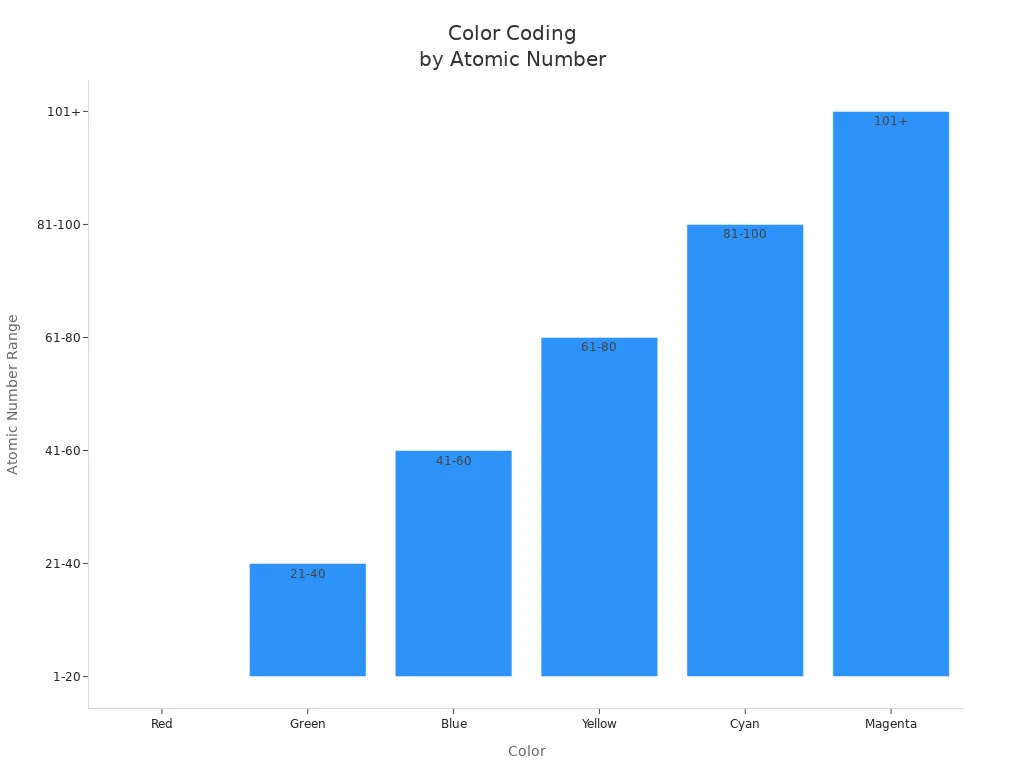
Modern x-ray scanners use a color palette to show objects by their atomic number. This makes it easier to see things that could be risky. Here is a chart that shows how colors match with atomic numbers:
Color coding has many good points:
It makes checking bags faster.
It helps security staff look at risky things first.
It helps find threats and keeps people safer.
The colors on x-ray pictures help security staff, but they still need to check carefully. Sometimes, safe and dangerous things can look the same color. When things overlap, it can be hard to see what is in a bag. Even with these problems, color coding in x-ray baggage scanners has made airport security better and more correct.
You can tell what things are made of by their color on the x-ray. Here is a simple chart to help you:
Color | Material Type |
|---|---|
Orange | Organic materials like clothes, food, paper, and explosives. |
Blue | Inorganic materials like glass, metals, and ceramics. |
Green | Mixed materials, which have both organic and inorganic parts like aluminum, silicon, and glass. |
Red | Materials that x-rays pass through easily, such as cloth, cardboard, or paper. |
If you know what each color means, you help security workers do their job faster. You also make your trip easier. When you understand x-ray color codes, you can pack better and get through airport checks with less stress.
You see orange for organic materials, blue for inorganic materials, and green for mixed materials. These colors help security staff find different types of items in your bag.
No, you cannot hide items this way. The scanner shows both the clothes and the hidden object. Security staff can spot unusual shapes or dense items, even if you wrap them.
Brightness shows how thick or dense an item is. Thick or dense things, like metal tools, look brighter. Thin or light things, like paper, look darker.
You see the shape and density of items, but not every tiny detail. The scanner helps security staff spot dangerous or hidden objects by showing clear outlines and colors.
Yes, x-ray scanners do not harm your electronics. Phones, laptops, and tablets stay safe during the scan.
 English